Summary: Tiki taka remains a major football influence, evolving from Barcelona’s possession game into a more
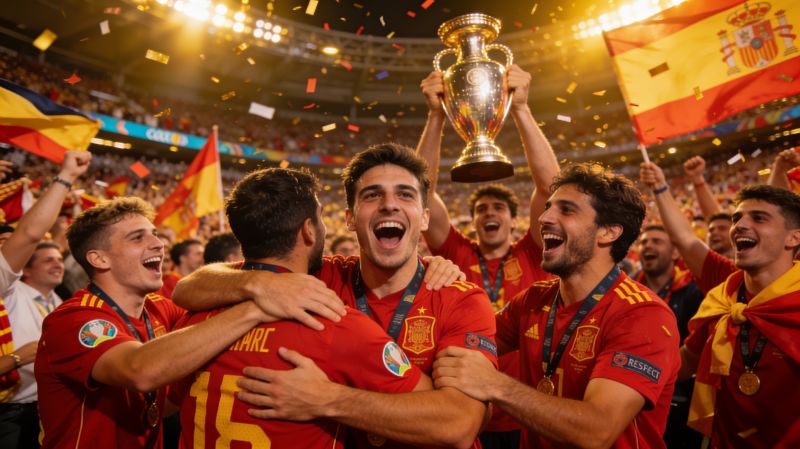
iki taka remains one of football’s most influential tactical ideas, even as elite teams increasingly favor speed, direct attacks and aggressive transitions. The style, built around short passing, constant movement and positional discipline, was central to Barcelona’s golden era and Spain’s international dominance. Its clearest image came during Spain’s 4-0 victory over Italy in the Euro 2012 final, when midfielders controlled the match through rapid combinations and patient circulation. Tiki taka was not simply a habit of passing sideways. At its best。tiki taka moved opponents from their defensive shape, created a narrow opening and attacked it before the space disappeared.Barcelona turned tiki taka into a global football language under Pep Guardiola. Between 2008 and 2012, the club’s midfield frequently featured Xavi Hernández, Andrés Iniesta and Sergio Busquets, a trio able to receive the ball under pressure and make the next pass before defenders could react. Lionel Messi often completed the final movement。dropping into space or cutting through the defensive line after a sequence of short exchanges. Guardiola’s Barcelona did not keep possession for the sake of statistics. Tiki taka served a clear purpose: control the rhythm, limit the opponent’s opportunities and force mistakes in uncomfortable areas. The 2009 Champions League final against Manchester United, won 2-0 by Barcelona, offered a sharp example of that authority.Spain’s national team gave tiki taka a different character. Barcelona’s version could be explosive, with Messi accelerating through gaps, while Spain often relied on slower, more measured control. During the 2010 World Cup, Vicente del Bosque’s side repeatedly used possession to calm matches and frustrate opponents. The final against the Netherlands in Johannesburg was tense and physical。
yet Spain refused to abandon its passing principles. Andrés Iniesta’s extra-time goal came after the team had continued searching for a technical solution rather than surrendering to the chaos of the occasion. For many supporters, that moment confirmed tiki taka as a philosophy of composure as much as a tactical system.The style has also faced serious criticism. Opponents learned to defend compactly, press the first pass and attack the space behind advancing full-backs. Barcelona’s 8-2 defeat by Bayern Munich in the 2020 Champions League exposed the danger of possession without sufficient defensive protection or running power. In that match。
Bayern’s pressing and vertical attacks punished Barcelona whenever the ball was lost. Critics argued that tiki taka had become predictable, particularly when teams circulated the ball around a crowded penalty area without producing a decisive pass. That criticism is fair in some cases, but it does not mean the underlying principles have disappeared. Arsenal, Manchester City and several leading European clubs still use elements of tiki taka, blending short passing with faster switches and more aggressive counter-pressing.Modern coaches have refined tiki taka rather than simply abandoning it. Manchester City’s positional play under Guardiola uses controlled build-up。numerical advantages and carefully timed movement, but it also embraces long diagonal passes and rapid attacks when the opportunity appears. Spain’s recent teams have shown a similar adjustment, keeping the emphasis on technical security while allowing greater vertical ambition. The most effective version of tiki taka today is less rigid and more pragmatic: circulate the ball when pressure demands patience, then attack immediately when a defender steps out of position. That evolution explains why tiki taka continues to appear in tactical debates. It is no longer a fixed blueprint associated only with one club or generation;it is a set of ideas that coaches reshape according to their players, opponents and the pace of modern football.